You might have seen this word pop up in chats, memes, or even arguments online—and felt confused or uncomfortable. That’s completely normal. Some words carry a lot more weight than they seem at first glance.
“Faggot” is one of those words. It’s not just slang—it has a deep history and emotional impact that people often overlook.
Understanding what it means (and when not to use it) is important, especially in today’s digital world where words travel fast.
Based on common online usage and language trends, this guide breaks it down in a simple, honest way so you know exactly what you’re dealing with.
What Does “Faggot” Mean? (Direct Answer)
“Faggot” is a highly offensive slur historically used to insult gay men. While it originally had unrelated meanings, today it is widely recognized as hurtful and disrespectful. It should not be used in casual conversation, as it can deeply offend and harm others.
Meaning & Definition
Primary Meaning
Today, “faggot” is mainly used as a derogatory insult toward gay men, especially in English-speaking cultures.
Secondary Meanings (Historical)
- A bundle of sticks or wood (old usage)
- A type of traditional food in the UK (rare, context-specific)
Chat Examples
- ❌ “He’s such a faggot” → Offensive and harmful
- ❌ “Don’t act like a faggot” → Used as an insult, not okay
Even when used jokingly, it can still hurt people deeply.
Background & Origin
The word originally meant a bundle of sticks in Old English. Over time, it evolved and, by the 20th century, became a slur targeting LGBTQ+ individuals.
It gained popularity in negative contexts, especially in media and casual speech during earlier decades when discrimination was more normalized.
Today, awareness has grown—and so has the understanding that this word is harmful.
Forgot Meaning
Forgot is the past tense of “forget.”
It means:
- To fail to remember something
- To leave something behind accidentally
- To not think about something
Examples:
- I forgot my keys at home.
- She forgot her friend’s birthday.
- We forgot to lock the door.
Simple meaning: Remember nahi raha or bhool jana.
Forgot Password Reset
“Forgot password reset” means recovering access to an account when you cannot remember your password.
Usually the process works like this:
- Open the login page
- Click Forgot Password
- Enter email or phone number
- Receive a reset code or link
- Create a new password
- Sign in again
Example:
“I clicked forgot password and reset my account successfully.”
Tip: Use a strong password and save it safely.
Forgot or Forget
Many learners confuse forgot and forget.
| Word | Meaning | Example |
|---|---|---|
| Forget | Present tense | I forget names easily. |
| Forgot | Past tense | I forgot your message. |
Easy Rule:
- Forget → happening now / habit
- Forgot → happened in the past
Examples:
- Don’t forget your homework.
- I forgot my homework yesterday.
Forgot Game
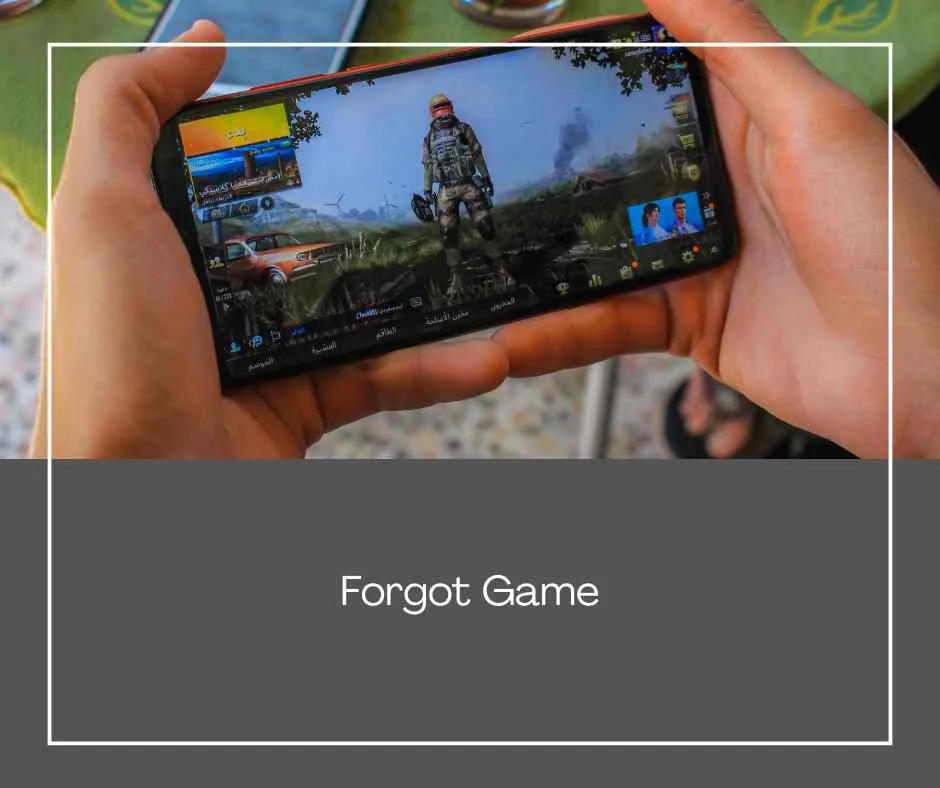
The phrase “forgot game” can have different meanings depending on context.
It may mean:
- You forgot the name of a game
- You forgot to play a game
- A game title includes the word “Forgot”
Example Sentences:
- I forgot the game’s controls.
- He forgot to save the game.
- We forgot which game we downloaded.
Always check the context because the meaning changes.
Forgot Synonyms
Here are simple words similar to forgot:
- Missed
- Overlooked
- Ignored
- Neglected
- Failed to remember
- Left behind
- Lost track of
Examples:
- I overlooked the meeting.
- She left behind her notebook.
These words can help make writing more natural.
Forgot Pronunciation
The correct pronunciation of forgot is:
/fər-GOT/
Simple pronunciation style:
Fer-GOT
Break it:
- Fer → soft sound
- GOT → strong ending sound
Example:
“I forgot my wallet.”
Practice by saying it slowly and then faster.
I Forgot Password
The phrase “I forgot password” is commonly used online.
A more natural English sentence is:
✅ I forgot my password.
Other examples:
- I forgot my email password.
- I forgot my account password.
- I forgot the login details.
If this happens:
- Use password recovery
- Verify your account
- Create a secure new password
Forgot in a Sentence
Here are simple sentence examples:
- I forgot my school bag.
- She forgot the answer.
- We forgot to call him.
- They forgot the meeting time.
- My brother forgot his books.
- I forgot where I put my phone.
- He forgot his homework again.
- We forgot the address.
These examples help you understand real usage.
Usage in Different Contexts
Casual Chats
Some people still use it jokingly among friends—but that doesn’t make it acceptable.
Example:
❌ “Stop being a faggot bro” (harmful, even if said jokingly)
Social Media
Rarely acceptable. Most platforms discourage or ban such language.
Professional Use
🚫 Never appropriate in workplaces or formal communication.
Gaming / Group Chats
Unfortunately, it may appear in toxic gaming environments—but it’s still offensive.
Meanings Across Platforms
| Platform | Tone | Example |
| Offensive | “Don’t say that word” | |
| Banned/flagged | Comment removed | |
| TikTok | Sensitive | Content may be restricted |
| Snapchat | Casual but risky | Can offend quickly |
| Discord | Toxic usage in some groups | Moderation needed |
Real-Life Examples & Memes
- ❌ “That joke is so bad, you sound like a faggot”
- ❌ Meme: “When someone loses a game and starts yelling slurs”
Even in memes, the word often reflects negativity or toxic humor.
Cultural or Regional Interpretations
US / UK
Widely recognized as a serious slur—socially unacceptable.
Asia (Pakistan, India, Philippines)
Some people may not fully understand its impact, but awareness is growing.
Australia
Also considered offensive, though slang culture can vary.
Other Meanings
| Field | Meaning | Description |
| Historical | Bundle of sticks | Original definition |
| Food (UK) | Meat dish | Traditional British food |
| Slang | Offensive insult | Most common modern meaning |
Common Mistakes & Misconceptions
- Thinking it’s “just a joke”
- Believing friends won’t mind
- Assuming it’s normal in gaming culture
- Confusing old meaning with modern usage
- Not realizing its emotional impact
Psychological / Emotional Meaning
| Tone | Impact |
| Positive | ❌ None |
| Neutral | ❌ Rare |
| Negative | ✔ Strongly offensive, hurtful |
This word is almost always negative and harmful.
Similar Terms & Alternatives
| Word | Meaning | Tone |
| Gay | Sexual orientation | Neutral |
| LGBTQ+ | Inclusive identity term | Positive |
| Slur | Offensive word | Negative |
Is It Offensive or Friendly?
It is offensive in nearly all situations.
Even if someone uses it jokingly:
- It can hurt others silently
- It can damage relationships
- It can lead to consequences online
Grammar or Linguistic Insight
Language evolves over time. Words that once had neutral meanings can become harmful based on how society uses them.
“Faggot” is a clear example of how context shapes meaning.
How to Respond
If someone uses this word, you can reply calmly:
- “That word isn’t okay to use.”
- “Let’s keep it respectful.”
- “You might not mean harm, but it’s offensive.”
- “Please don’t use that word.”
- “There are better ways to say that.”
Differences From Similar Words
| Word | Meaning | Difference |
| Gay | Identity | Neutral term |
| Queer | Reclaimed term | Depends on context |
| Faggot | Slur | Offensive and harmful |
Relevance in Dating & Online Culture
On platforms like Tinder or social apps:
- Using this word can get you blocked or reported
- It signals disrespect and immaturity
- Gen Z culture strongly rejects such language
Respectful communication matters more than ever.
Popularity & Trends
With the rise of TikTok and online awareness:
- Harmful language is being called out more
- Communities promote inclusive speech
- Younger generations avoid slurs
When NOT to Use “Faggot” (IMPORTANT)
Avoid this word in:
- School or college conversations
- Workplace discussions
- Social media posts
- Gaming chats
- Public spaces
- Around people you don’t know well
In short: just don’t use it at all.
FAQs
1. Is “faggot” a bad word?
Yes, it is considered a highly offensive slur.
2. Can it ever be used jokingly?
Even as a joke, it can hurt people and is not recommended.
3. What was its original meaning?
It originally meant a bundle of sticks.
4. Why is it offensive today?
Because it has been used to insult and harm LGBTQ+ people.
5. What should I say instead?
Use respectful and neutral language depending on the context.
Conclusion
Words have power—and “faggot” is a word with a heavy, painful history. While it may still appear in jokes or online spaces, understanding its meaning helps you make better, more respectful choices.
In a world that’s becoming more aware and inclusive, choosing your words wisely isn’t just polite—it’s powerful.

Harper Lewis
Harper Lewis is a passionate storyteller who finds beauty in the little moments of life. Ever since childhood, Harper has been fascinated by words and their power to inspire, heal, and connect people across the world. With a love for exploring human emotions and everyday adventures, Harper’s writing blends heart, humor, and honesty. When not writing, Harper enjoys long walks, discovering hidden cafés, and diving into books of all genres. Harper believes that stories are bridges that link hearts and minds, making the ordinary extraordinary.
Books by Harper Lewis:
-
Whispers of the Heart
-
The Light Between Shadows